Overview

Context
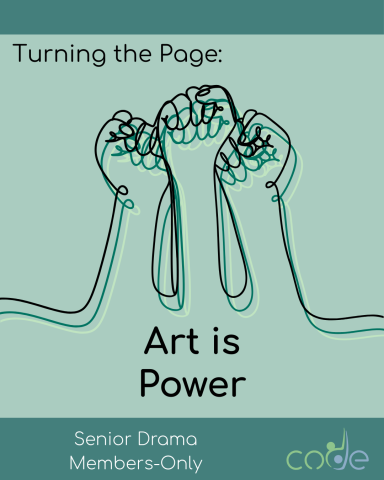
This unit explores poetry and social justice through movement and tableau. Students explore the role of Art and how it can be a positive force in their lives. Students will engage in a series of movement/tableau exercises that highlight the importance of art, equity and social justice focused in the poem “Art Is Power”.
Unit Guiding Questions
- How can art/poetry affect social change?
- In what ways can art represent power?
- How can poems teach valuable lessons?
- How can art be an act of resistance?
- How can art that brings joy to a community be seen as an act of resistance?
- How can art reflect anti-oppression and anti-racism?
Poetry
- How/why are poems an effective way to convey messages?
- What poetic devices are used to help make the work more interesting/effective?
The Artist
- How does Randell Adjei use his art to inspire others?
- Why is it important to see and experience art from various perspectives?
- How does Adjei use art to reflect on their own lived experiences?
- What insight does Adjei provide about anti-oppression and anti-racism?
Tableau
- How can you connect poetry to movement and the body?
- What tableau skills are effective in conveying/interpreting messages in the work?
Assessment and Evaluation
Throughout the unit, student’s achievement of the identified learning goals is monitored using a variety of assessment strategies and tools.
Assessment for Learning
- Exploring and Performing the text
- Discussion
- Teacher Observation
- Active Participation
- Elements of Poetry and Tableaux
- Planning Worksheets
- Teacher Direction and Feedback
- Rehearsal
- Performance
Assessment as Learning
- Poetry Worksheet
- Small Group Presentations
- Journal
- Planning Rehearsal
- Performance as culminating activity
Assessment of Learning
- Culminating Task Assessment Checklist
- Journal Rubric
Lessons
Lesson 1a: Exploring “Art is Power” - Exploring the Text
Students will become familiar with Adjei’s poem “Art is Power”. Students will learn and discuss poetry conventions, terminology, the artist in general and their connection to power/equity in Art. Students will explore the effectiveness of the poem through an equitable lens that will include research (exploration of website), worksheets and discussion.
Lesson 1b: Exploring “Art is Power” - Accessing your Power through Art
Students will create a tableau based on a word or phrase from the poem. In small groups, students will use tableaux to interpret one or more stanzas of the poem. Each group will present their “stanzas” to the class.
Lesson 2: Performance of Poem
Students will plan, rehearse, and present a dramatic interpretation of “Art is Power” using movement and tableau.