
Overview
Racism
"Race is a socially constructed way of judging, categorizing and creating difference among people. Despite the fact that there are no biological “races,” the social construction of race is a powerful force with real consequences for individuals.
Racism operates at several levels, including individual, systemic or institutional and societal. Racial discrimination can be impacted by related Code grounds such as colour, ethnic origin, place of origin, ancestry and creed. In addition, race can overlap or intersect with other grounds such as sex, disability, sexual orientation, age and family status to create unique or compounded experiences of discrimination.
Racial discrimination can occur through stereotyping and overt prejudice or in more subconscious, subtle and subversive ways. Racial discrimination also occurs in significant measure on a systemic or institutional level. Policies, practices, decision-making processes and organizational culture can create or perpetuate a position of relative disadvantage for racialized persons."
- Ontario Human Rights Commission. (n.d.). Part 1 – setting the context: Understanding race, racism and racial discrimination. Policy and Guidelines on Racism and Racial Discrimination. https://www.ohrc.on.ca/en/policy-and-guidelines-racism-and-racial-discrimination
General Education Resources
- Act2endracism – Provides resources and tools for the general public, community organizations, and survivors of racism. Created by a coalition of Asian Canadians and organizations.
- Annenberg Inclusion Initiative (Instagram): Passionate about eradicating inequality & ending invisibility in entertainment.
- Anti-Racism Engagement Resources - Canadian Heritage
- Anti-Racism for Kids 101 PJI
- Avoiding Racial Equity Detours: Paul Gorski
- #BlockHate Campaign Highlights the Consequences of Online Hate
- Books about Racism and Social Justice - Common Sense Media
- Building a Stronger and More Inclusive Ontario: Ontario’s Anti-Racism Strategic Plan, released in August, 2023.
- Bystander intervention trainings by Right to Be (Also provides, anti-harassment trainings for workplace or street).
- Bystander intervention trainings by Asian Americans Advancing Justice | Chicago.
- Canadian Association for Neuroscience
- Canadian Race Relations Foundation / Fondation canadienne des relations raciales - YouTube
- Creating an anti-racist classroom
- Double pandemic: racial discrimination amid coronavirus disease 2019
- Eizadirad, A., Abawi, Z., & Campbell. A. (2023). Enacting anti-racism and activist pedagogies in teacher education: Canadian perspectives. Canadian Scholars Press.
- Engaging My Child: Parent Tip Tool - Uplifting Families through Healthy Communication about Race - American Psychological Association
- Experiences Canada Anti-Racism Resources
- HeartMob by Right to Be – Report online harassment and receive support.
- Hodson, Gordon. (2016). “Race as a Social Construction,” Psychology Today.
- How to change systemic racism in Canada (approx. 5 minutes)
- Implicit Bias | Concepts Unwrapped (approx. 8 minutes)
- Jewell, T., & Durand Aurélia. (2020). This book is anti-racist: 20 lessons on how to wake up, take action, and do the work. Frances Lincoln Children's Books.
- Kendi, I. X. (2019). How to be anti-racist.
-
Learning for Justice - https://www.learningforjustice.org/
- What is White Privilege, Really? webinar
- Let's Talk! Discussing Whiteness webinar
- Latinx History is Black History webinar
- Teaching Asian American and Pacific Islander Heritage webinar
- Race Matters student-facing article (Senior)
- Mikal Amin Lee (2020) Hip-Hop practice as pedagogy, Review of Education, Pedagogy, and Cultural Studies, 42:5, 409-426, DOI: 10.1080/10714413.2021.1874849
- McIntosh, P. (1988). White Privilege: Unpacking the Invisible Knapsack. (Not for use with students).
- Muhammad, G., & Love, B. L. (2020). Cultivating genius: an equity framework for culturally and historically responsive literacy. Scholastic Inc.
- Muhammad, G. (2023). Unearthing Joy: A Guide to Culturally and Historically Responsive Teaching and Learning. Scholastic Inc.
- Multiculturalism At 50: Our Mirror At Midnight
- North, Anna. (2020). “What it means to be anti-racist.” Vox.
- NYT 25 Mini Films for Exploring Race, Bias, and Identity with Students
-
Podcasts
- Colour Code, a podcast about race in Canada by The Globe and Mail
- BE ANTIRACIST with Ibram X. Kendi
- The Secret Life of Canada with Falen Johnson and Leah Simone Bowen by CBC
- Code Switch by NPR
- Project 1907 – Partnered with VAFF and Elimin8Hate to provide a platform to report and record race-based hate crimes in Canada.
- “Psychology Works” Fact Sheet: Racism by the Canadian Psychological Association.
- Public Service Alliance of Canada Anti-Racism Resources
- Race Relations in Canada 2019 Survey by Environics Institute and Canadian Race Relations Foundation.
- Racial Equity Tools
- Racist Incident Helpline (toll free)
- Rathi, Akshat. (2016). “How to intervene in a racist attack”.
- The Role of White Co-Conspirators in Dismantling Systemic Racism
- Safe at School – Equity and Inclusion Resources https://www.safeatschool.ca/resources/resources-on-equity-and-inclusion
- Safe at School – Racism, Sexism & Homophobia https://www.safeatschool.ca/plm/equity-and-inclusion/racism-sexism-homophobia-social-problems
- Systemic racism explained (approx. 7 minutes)
- Taylor, Keeanga-Yamahtta. (2020). From #BlackLivesMatter to Black Liberation.
- The Racial Healing Handbook: Practical Activities to Help You Challenge Privilege, Confront Systemic Racism, and Engage in Collective Healing [Handout].
- Thinking About Social Movements: https://ruckus.org/training-manuals/direct-action-resources/
- What systemic racism in Canada looks like (approx. 10 minutes)
- White Accomplices: Actor to Ally to Accomplice Grade 6 to Adult
- Your Kids aren’t Too Young to Talk about Race: PJI
Performing Arts Resources
- Authenticity in casting: From ‘colorblind’ to ‘color conscious,’ new rules are anything but black and white - Jessica Gelt
- Chen, & Kacerek, C. R. (2022). Leaders and Followers during Sociodramatic Play: A Study of Racial/Ethnic Minority Preschool Children from Socioeconomically Disadvantaged Backgrounds. Journal of Research in Childhood Education, 36(3), 517–540. https://doi.org/10.1080/02568543.2021.1960939
- Ethnic and Cultural Diversities video series - Brock University
- Fatkin, G. Y. K. (1988). Anti-racism themes in theatre for young audiences: Teaching tolerance through drama (thesis). https://summit.sfu.ca/item/5172
-
HowlRound Theatre Collective
- Anti-Racist Theatre resources: https://howlround.com/tags/anti-racist-theatre
- Diversity, Equity and Inclusion resources: https://howlround.com/tags/diversity-equity-and-inclusion
- NFB/ONF - Anti-Racism Films - https://www.nfb.ca/playlist/anti-racism-films/
- Rojas, N. (2022, April 13). Harvard class examines representation in theater. Harvard Gazette. https://news.harvard.edu/gazette/story/2022/04/harvard-class-examines-representation-in-theater/
CODE Resources
- ALL Dance Course Profiles: Cultural Dance – Secondary
- An Impassioned Stand - Senior Drama - Members Only
- In or Out – Junior Dance/Drama – Public
- World on Fire – Intermediate Dance – Public
- Clowning for Change – Grade 9 Drama – Members Only
- The Outsider: A Drama Structure Based on the Play Schoolhouse by Leanna Brodie – Senior Drama – Member Only
Picture Books for Entry Points


Anti-Black Racism
Anti-Black racism includes prejudice, attitudes, beliefs, stereotyping and discrimination that is directed at people of African descent and is rooted in their unique history and experience of enslavement. Anti-Black racism is deeply entrenched in Canadian institutions, policies and practices, such that anti-Black racism is either functionally normalized or rendered invisible to the larger white society. Anti-Black racism is manifested in the legacy of the current social, economic and political marginalization of Black people in Canada in society such as the lack of opportunities, lower socio-economic status, higher unemployment, significant poverty rates and overrepresentation in the criminal justice system. - Canadian Heritage, Addressing Anti-Black Racism
General Education Resources
- Recognizing Excellence
- Anti-Black Racism - ETFO
- Anti-Black Racism in Canada - The Canadian Encyclopedia
- Anti-Black racism in Canada: time to face the truth (chrc-ccdp.gc.ca)
- A People’s Uprising: Understanding the Recent Protests Black LIves Matter Slides to explain the current protests Grade 7/8 - relevant resources engagement with Black Lives Matter and context for police killings of Black Canadians
- Black Health Alliance — Improving the health and well-being of Black communities in Canada
- Black Lives Matter @ School resources
- Black Lives Matter Canada
- Anti-Black Racism in the Criminal Justice System (PDF) - John Howard Society of Ontario
- Black Lives Matter Resources (for adults to kids: K - Post secondary)
- Cole, D. (2023, January 11). The skin I’m in: I’ve been interrogated by police more than 50 times-all because I’m black. Toronto Life. https://torontolife.com/life/skin-im-ive-interrogated-police-50-times-im-black/
- Cole, D. (2020). The Skin We're In: A Year of Black Resistance and Power.
- Confronting Anti-Black Racism
- CRRF's 28 Days of Black Canadian Excellence
- ETFO Curriculum Links and Worksheets - organized by division and available in French
-
Learning for Justice - https://www.learningforjustice.org/
- Teaching Hard History: American Slavery
- Teaching the American Civil Rights Movement
- Let's Talk! Teaching Black Lives Matter webinar
- The Colour of Law webinar about the role of U.S. segregation in housing, employment, wealth accumulation, etc. and the policies that made it happen
- Les manifestations monstre dans les rues de Toronto contre le racisme anti-noir (article - 7/8 année)
- Living In Colour: The history of anti-Black racism in Canada
- Living In Colour: Why ignoring Canada’s anti-Black racism affects Black Canadians today
- Notable Black Canadians - Canadian Heritage
- Professional Advisory on Anti-Black Racism, video below
- Raising a Young Black Man by Asha Tomlinson (June 1, 2020) - CBC (Grade 7-12 and adult) https://www.cbc.ca/news/canada/raising-young-black-man-1.5594179
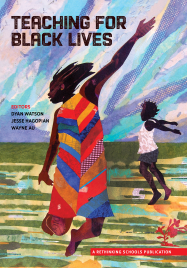
- Teaching for Black Lives
-
Visionary, Therapeutic, Critical, Anti-Racist Pedagogy: Centering Black Power, Healing and Joy by Caryn Davidson
- What Black Joy Means – And Why It’s More Important Than Ever
- What is 'black joy' and why do we need it in our lives? | BBC Ideas | Irenosen Okojie
Performing Arts Resources
- CODE’s Addressing Anti-Black Racism Panel & teacher’s resource (PDF)
-
HowlRound Theatre Collective
- Black Feminist Theatre – Podcast https://howlround.com/when-and-where-we-enter-black-feminist-theatre
- Black Theatre resources: https://howlround.com/tags/black-theatre
- Double-Consciousness as a Black Theatre Practitioner (Performing Blackness) – Essay https://howlround.com/seeing-double-double-consciousness-black-theatre-practitioner
- It's About Time: Dancing Black in Canada 1900-1970 Exhibition curated by scholar, artist, and educator Dr. Seika Boye
Community Practitioners
CODE Resources
- African and Hip-Hop – Grade 7 Dance
- Star-Cursed: Exploring Otherness in Shakespeare's Othello, Workshop Notes Code-Upon Avon 2019 – J/I/S Drama – Public
Picture Books for Entry Points


Plays and Other Sources


Anti-Indigenous Racism
[R]acism is acutely experienced by many Indigenous people in Canada, [infecting] the lives of individuals and institutions – sometimes quietly, sometimes covertly … but always unjustly. [...E]xpressions of racism [include] racialized stereotypes and stigma, violent racism, and structural racism. The discussion of structural racism explores how paternalistic and disempowering federal policies and institutions perpetuate and deepen discrimination against Indigenous groups. These damaging systems and institutions include the policies of the federal Indian Act, the appalling abuses inflicted through the residential school system, and ongoing race-based discrimination and injustice experienced by Indigenous people involved in the justice and health care systems. Indigenous offenders are more likely to receive jail sentences if convicted of a crime and are currently the most over-represented group in the Canadian criminal justice system. In the health care system, Indigenous patients often experience longer wait times, fewer referrals, and disrespectful treatment. These historical and contemporary experiences of racism have been felt through generations of Indigenous people, causing cumulative and collective wounds that are not easily healed.
- Indigenous experiences with racism and its impacts, written by Samantha Loppie, Charlotte Reading, and Sarah de Leeuw
Also explore the section of this resource exploring: Settler Colonialism and Ecocide.
General Education Resources
- Centre for Excellence in Indigenous Health
- Reframing Indigenous stories in joy: Jesse Wente
- Why do Indigenous topics cause such emotional discomfort? (approx. 4 minutes)
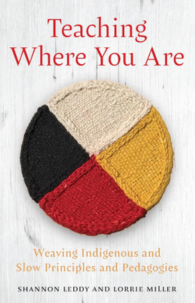 Teaching Where You Are : Weaving Indigenous and Slow Principles and Pedagogies
by Shannon Leddy & Lorrie Miller
Teaching Where You Are offers a guide for non-Indigenous educators to work in good ways with Indigenous students and provides resources across curricular areas to support all students. In this book, two seasoned educators, one Indigenous and one settler, bring to bear their years of experience teaching in elementary, secondary, and post-secondary contexts to explore the ways in which Indigenous and Slow approaches to teaching and learning mirror and complement one another.
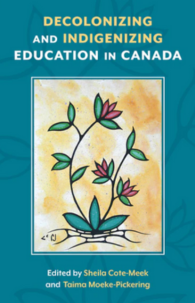
Decolonizing and Indigenizing Education in Canada
by Sheila Cote-Meek, Taima Moeke-Pickering
Decolonizing and Indigenizing Education in Canada edited by Sheila Cote-Meek, an Anishnaabe-Kwe from the Teme-Augama Anishnabai, and Taima Moeke-Pickering, Maori of the Ngati Pukeko and Tuhoe Tribes from Aotearoa - New Zealand, is an expansive collection exploring the complexities of decolonization and indigenization of post-secondary institutions. Seeking to advance critical scholarship on issues including the place of Indigenous epistemologies, knowledges, curriculum, and pedagogy, Decolonizing and Indigenizing Education in Canada aims to build space in the academy for Indigenous peoples and resistance and reconciliation.
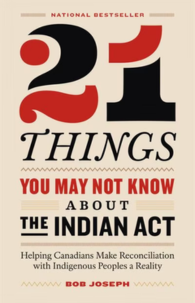
21 Things You May Not Know About the Indian Act: Helping Canadians Make Reconciliation with Indigenous Peoples a Reality
by Bob Joseph
Based on a viral article, 21 Things You May Not Know About the Indian Act is the essential guide to understanding the legal document and its repercussion on generations of Indigenous Peoples, written by a leading cultural sensitivity trainer.
Toronto Metropolitan University. (2022). Key Concepts in Anti-Indigenous Racism. In Equity, Diversity and Inclusion in Practice. Experiential Learning Hub, Centre for Excellence in Learning and Teaching. Retrieved from https://pressbooks.library.torontomu.ca/ediinpractice/chapter/key-concepts-in-anti-indigenous-racism/
Government of Canada. (2023, September 11). Anti-Racism Lexicon. Retrieved from https://www.canada.ca/en/department-national-defence/services/systemic-racism-discrimination/anti-racism-toolkit/anti-racism-lexicon.html
Picture Books for Entry Points

Plays and Other Sources


Anti-Latinx Racism
Definition of Anti-Latinx racism.
General Education
In progress
Picture Books for Entry Points


Plays and Other Sources


Anti-AAPI Racism
[A]nti-Asian racism refers to historical and ongoing discrimination, negative stereotyping, and injustice experienced by peoples of Asian origin, based on others’ assumptions about their ethnicity and nationality. Peoples of Asian origin are subjected to specific overt and subtle racist tropes and stereotypes at individual and systemic levels, which lead to their ongoing social, economic, political and cultural marginalization, disadvantage and unequal treatment. This includes perceptions of being a “Yellow Peril,” a “Perpetual Foreigner,” a “Model Minority,” “exotic,” or “mystic.” These stereotypes are rooted in Canada’s long history of racist and exclusionary laws, and often mask racism faced by peoples of Asian origin, while erasing their historical contributions to building Canada.
The term Asian encompasses a wide range of identities that the very term Asian can obscure. While all may experience being “otherized,” specific experiences of anti-Asian racism vary. Some are constantly being perceived to be a threat, some face gendered exotification and violence, some are more likely to be subjected to online hate and racist portrayals in the media, while others face Islamophobia and other forms of religious-based discrimination.
- Canadian Heritage, Anti-Asian Racism
General Education Resources
- Noteworthy Canadians of Asian Heritage - Canadian Heritage
- Faces of Racism
- Addressing Anti-Asian Racism: A Resource for Educators – Elementary Teachers’ Federation of Ontario
- Anti-Asian Racism Resources – Human Resources Student Association, Ryerson University
- Elimin8hate
- This is what anti-Asian racism looks like in Canada
- Addressing Anti-Asian Racism: A Resource for Educators by the Toronto District School Board, 2021.
- “There’s a long, global history to today’s anti-Asian bias and violence,” by Kim Yi Dionne, Sarah Hayes, and Fulya Felicity Turkmen, The Washington Post (Monkey Cage), 2021.
- History of South Asians in Canada: Timeline by the South Asian Studies Institute, University of the Fraser Valley
- Road to Justice – The legal struggle for equal rights of Chinese Canadians.
- How To Start Conversations About Anti-Asian Racism With Your Family by Anna Sirianni and Audie Cornish, Code Switch, NPR, 2021.
- “The Riot that Changed Canada” by Crawford Kilian, The Tyee, 2015.
- 360 Riot Walk - a 360 Video Walking Tour of the 1907 Anti-Asian Riots in Vancouver.
- Saffron Threads: Exploring South Asian Canadian Culture, History, and Heritage, a set of educational resources for BC school teachers by the University of the Fraser Valley and Royal BC Museum.
- Eyes Open: An Anti-Asian Racism PSA (approx. 3 minutes)
Performing Arts Resources
- Asian Arts and Culture Trust
- “Why ‘Kim’s Convenience’ Is ‘Quietly Revolutionary’” by Priya Krishna, The New York Times, 2021.
From Canada's Theatre Museum Legend Library Collection: Jean Yoon

Jean Yoon’s interview on Canada’s Theatre Museum YouTube channel - screenshot
Explore our Legend Library Collection featuring a special interview with actor and writer Jean Yoon. In this candid conversation, she shares her perspectives on creating theatre in Canada, the relationship between activism and art, and the ongoing pursuit of inclusivity and equity in the performing arts.
In the Exhibition: Lady Rokujo Costume from "No No Miya"

Costume for Lady Rokujo in "No No Miya," designed by Julia Tribe, Tapestry Music Theatre
Now on view in our "Welcome to the Museum" exhibition is the costume of Lady Rokujo from "No No Miya," an opera presented in Toronto in 1995 and inspired by the classical Japanese Noh play "Aoi no Ue." Created by composer Rudolph Komorous and produced by Tapestry Music Theatre, the piece reimagines a centuries-old tale from "The Tale of Genji," blending Japanese theatrical traditions with Canadian operatic storytelling. This production followed an earlier version first staged in Vancouver in 1974, commissioned by the Vancouver New Music Society. The 1995 staging was part of the "Today’s Japan" program at Harbourfront Centre.
CODE Resources
- The Name Jar / Le pot de prénoms - Primary Drama - Members-only Resource
Picture Books for Entry Points


Plays and Other Sources


Arabophobia
Definition of arabophobia.
General Education
In progress
Picture Books for Entry Points
Plays and Other Sources

Recommendations for elementary and high school appropriate plays provided by:

Feedback
We would love for you to add to this resource! If you see something missing, have a suggested resource or want to flag a concern with a resource shared here, please use the Feedback button in the left menu. As a team of volunteers, CODE will do our best to respond to these inquiries and update these resources as often as possible.
